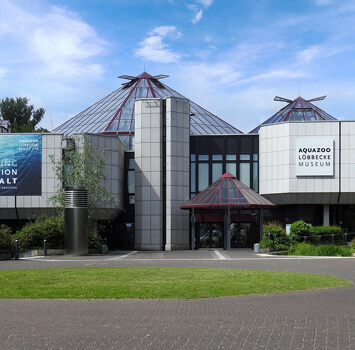
Among Dusseldorf’s most renowned attractions, Aquazoo is a unique combination of zoo, aquarium, and natural history museum offering interactive experiences to visitors and residents of all ages. The facility exhibits marine animals, freshwater creatures, rainforest and desert animals, as well as their habitats in 25 different themed enclosures. Through graphic exhibits and interactive media, the museum enables visitors to experience and understand the origin and evolution of diverse species of flora and fauna.
The museum was first opened in 1987 in North Park under the name ‘Löbbecke-Museum + Aquazoo’. It has since then been upgraded several times, with new species added each year. It covers an area of 6800 m² and is home to around 560 animal species presented in aquariums, terrariums, insectariums, and a tropical hall.
Also housing a collection of natural objects from biology, geology, and paleontology, including rocks and fossils, a herbarium, and other specimens and models of various animal groups, the facility showcases marine life and natural history, creating a fascinating world.
Yes, visiting this unique combination of zoo and aquarium can be a worthwhile experience, especially for families and science lovers. The facility organizes events and displays unique exhibitions all year round, making it a great spot for outings with friends or family. The museum also arranges guided tours, lessons, workshops, and live feedings, allowing visitors to get up close with animals with the goal of motivating them to protect nature.
Various events organized throughout the year at the Aquazoo, including the Memento Mori exhibition, Valentine's Eve (Valentinsabend), Nachhaltiges Familienfest, etc make visiting this facility a rewarding experience.
For quick decision making, take a quick look at our list of pros and cons to decide whether Aquazoo Düsseldorf is the right choice for you.This natural history museum is worth visiting for a wide range of audiences. This includes:
Offering high engagement for families with children, the facility showcases interactive ‘participation stations’ to explore evolution hands-on and extend learning opportunities. Commented feedings are another source of enriching experience about the biology, behavior, and habitats of different animal species.
Guided tours, lessons, workshops, and competency-oriented lessons exclusively for educational groups make this facility great for imparting biological knowledge to students of all ages and school types.
This unique combination of public aquarium and natural history museum, showcasing around 560 species in themed displays alongside exhibitions on evolution and biodiversity, is highly recommended for marine & animal enthusiasts.
| Website: | https://aquazoo-duesseldorf.de |
|---|---|
| Phone number: | 0211 - 8996150 |
| Email: | aquazoo@duesseldorf.de |
| Opening Hours: | Every Day from 10 a.m. to 6 p.m* |
| Tickets: | Buy Tickets & Select Timeslot |
| Events: | Current Events & Program |
| Vouchers: | Purchase Gift Vouchers |
*The museum remains closed January 1st, Rose Monday, May 1st, June 13th from 3 pm, October 7th from 2 pm, December 24th, December 25th and December 31st.
Tickets for admission to Aquazoo Löbbecke Museum can be purchased online via the official website or at the counter. Payment can be made by cash, Girocard, international debit cards (Maestro and V Pay), credit cards (Mastercard and Visa), contactless payments (under 25 euros without PIN/signature), and mobile payments (including Apple Pay and Google Pay).
When booking online through the museum's website, you will be charged an additional €1 for the convenience of using the ‘fast lane access’. Below is the clear breakdown of prices which you can expect to pay at the ticketing counter:
| Adults - €10 | People aged 18 and over, including pensioners |
|---|---|
| Reduced (Discounted Ticket) - €5.50 | Valid for children and youth up to 18, pupils, students, trainees, groups of 10+, and NRW Volunteer Card holders. |
| Family - €20 | Valid for up to 2 people and all own children (or grandchildren) under 18 years |
| Groups - €4.50 per person | Free Entry - Children under 6; daycare groups (incl. two accompanying adults); severely disabled persons (80%+ disability, incl. accompanying adult if required); Düsselpass, Düsseldorf Card and Art:card holders; Aquazoo Friends’ Circle members; press representatives and cultural committee members |
| Holders of the Düsseldorf Family Card | Receive 20% discount |
The museum also organizes daily scheduled, narrated animal feedings offering fascinating insights into the lifestyles of animals from freshwater and marine wetlands. These annotated feedings are supervised by staff members who explain the connections between animal species, their habitats, and current challenges in species conservation. The feeding schedule for these is:
Monday - 11 am: Piranhas (Room H)
Tuesdays - 2:30 pm: Dwarf mongooses (Room W)
Wednesday - 12 noon: Coral Reef (Room E)
Thursdays - 11 am: Large Aquarium (rooms D, E, F)
Fridays - 12.30 pm: Penguins (Room M)
Note: The commented feedings do not take place on public holidays. Please also pay attention to the daily updated information on the official website.
Yes, the Aquazoo Löbbecke Museum in Düsseldorf is easily accessible for visitors with mobility, visual, and hearing disabilities. With a wheelchair-accessible design, the building features ground-level entrances, automatic doors, and four internal elevators to support full mobility. The exhibition is equipped with an inductive hearing loop in the lecture hall, and guided tours are offered for people with hearing impairments (with advance registration). Audio guides can also be purchased in English language for a small fee. For visually challenged visitors exhibition is designed with high contrast and glare-free lighting to improve visibility.
The museum has also been awarded the national “Travel for All” certificate for being fully accessible to visitors with disabilities.
Key services offered at Aquazoo include guided tours, educational workshops, birthday parties, the Kids Club for research, and digital resources like virtual tours and apps, with accessibility features for visitors.